How It Ended

Sometimes, I want to dissolve into the atmosphere. Not in a dying sense­­––more like a soft, restful sleep. This desire comes when everything begins to feel very, very heavy. My clothes, my bones, my eyes. They are impossible to lift. I become a jumble of immovable parts, curled up on the floor. Jagged and grotesque.

I wanted to dissolve on April 3, 2022, after spending that past week isolated in my dorm room, testing positive for COVID-19. With nothing to do and no one to see, I was left with one miserable task: writing my thesis.

My thesis was a project I was obsessed with, controlled by, and embarrassingly behind on. I’d been pouring over its pages for months, always despising what I wrote. I could barely finish a paragraph before deciding it wasn’t good enough. Write, rewrite. Turn back, start again.

Like a sticker continually peeled and reapplied, my words were loosing their grip. Meanwhile. the paper beneath grew worn with overuse.

Even before I entered COVID-19 isolation, my thesis was a powerful force of social distancing. It cornered me in silent study spots, from which I could only be rescued by friends; insistent texts that I get dinner, get out. Gratefully, I’d comply. But during my week in isolation, I received no such texts. I wrote feverishly, for hours and hours, day in and day out. I even dreamed about writing. Pages of text appeared behind my closed lids, and I edited them in fitful slumber––only to awaken with the hollow realization that no work had been done. It was maddening.

The more work I did, the less any of it made sense. My thesis was withering away under my desperate fingers, but I couldn’t let go, not even for a few hours. Until one night, I found myself on the floor, resolved that I would never finish. Laying there, I cried and cried, until finally peeling myself off the floor, I put on a mask and headed out of my room for the first time that day.

I never walked so slowly across campus before. After every few steps I paused for a break, cradling my ribs in my arms. It must have been a strange sight: this lone girl trudging and swaying, as if on a mountain and then on a cliff. I hoped no one could see me in the dark. Painstakingly, I made my way to into the academic quad.

The quad, offering the most impressive view of Colby, has this way of cradling me. Even on the toughest nights, I could find respite there––looking up at Miller Library, its tower scraping the night sky, its stone steps and white pillars glowing in angelic light. But on that night, I remember standing beneath glow of Miller, and feeling only heaviness. I remember the weight of my cowering body, swaying in the nonexistent breeze.

I was released from isolation two days later, falling back into the arms of friends who had been waiting to catch me. In their company, the impossible weight of thesis-writing quickly dissipated. Life was re-saturated with long talks over dinner, laughter on the way to class, dancing and drinking and hungover breakfasts. And soon, my thesis pages began materializing.

But as my project neared completion, a new kind of heaviness began to settle in. The feeling was inverted: it wasn’t I who wanted to dissolve, but everything around me. Colby was slipping into the unreachable past.

Wait! I wanted to yell, just wait! But all the lasts were falling around us, like cherry blossom petals. I had my last class in Lovejoy, my last dinner in Bobs, my last late night in Miller. There was barely time to mourn these casualties.

I think my friends could feel this dissolving, too. But they were more graceful than I. They could release their hold on Colby. As they turned away from the world we had built together, and towards the open future, a new loneliness bloomed inside of me.

On the night before graduating Colby, I felt frantic. I was witnessing the end of something gigantic and invisible. The end of worlds come like this, sometimes.

Once more, I stood in the middle of the academic quad (where I would receive a diploma 12 hours later). I stood there and cried for all the things my friends and I would miss, and all the things we wouldn’t. All that we’d remember, and all that we’d forget. I felt jagged and grotesque. But there was beauty in letting myself feel all of it – in surrendering to the crushing force of something that wasn’t supposed to be sad, and letting it be so. Letting it be heavy and important.


In the past month, I’ve graduated college, moved across the country, and started my first job. I’ve left nearly everything that was and headed straight towards all that wasn’t yet.

I wish I could say I embraced the change with zeal––that I was a smiling graduate, thrilled to be starting a new chapter of life. But I wasn’t. When people talk about graduating, they never seem to mention the loss that comes with it. Maybe they should.

Because some, nights this all this feels temporary. I catch myself thinking about the fall, about our return to Colby that will, of course, not take place. I even catch myself missing my thesis, or at least, that weight which kept me so grounded in place.

Mostly though, I miss the potential of each day to be spectacular or devastating––and it hardly even mattered which.

Now I stand in the wake of this, wondering: why at the end of the story, do we begin to feel all of it? But I still have my friends, as far away as they might seem right now. And I have that strength found in solitude––found searching under the steps of Miller Library. Because on my last trip there, I found what I couldn’t in April. I found it without hands to hold me.

This is how Colby ended for me. Not with a bang, but with a soft whisper of sorrow, and deepest thanks.
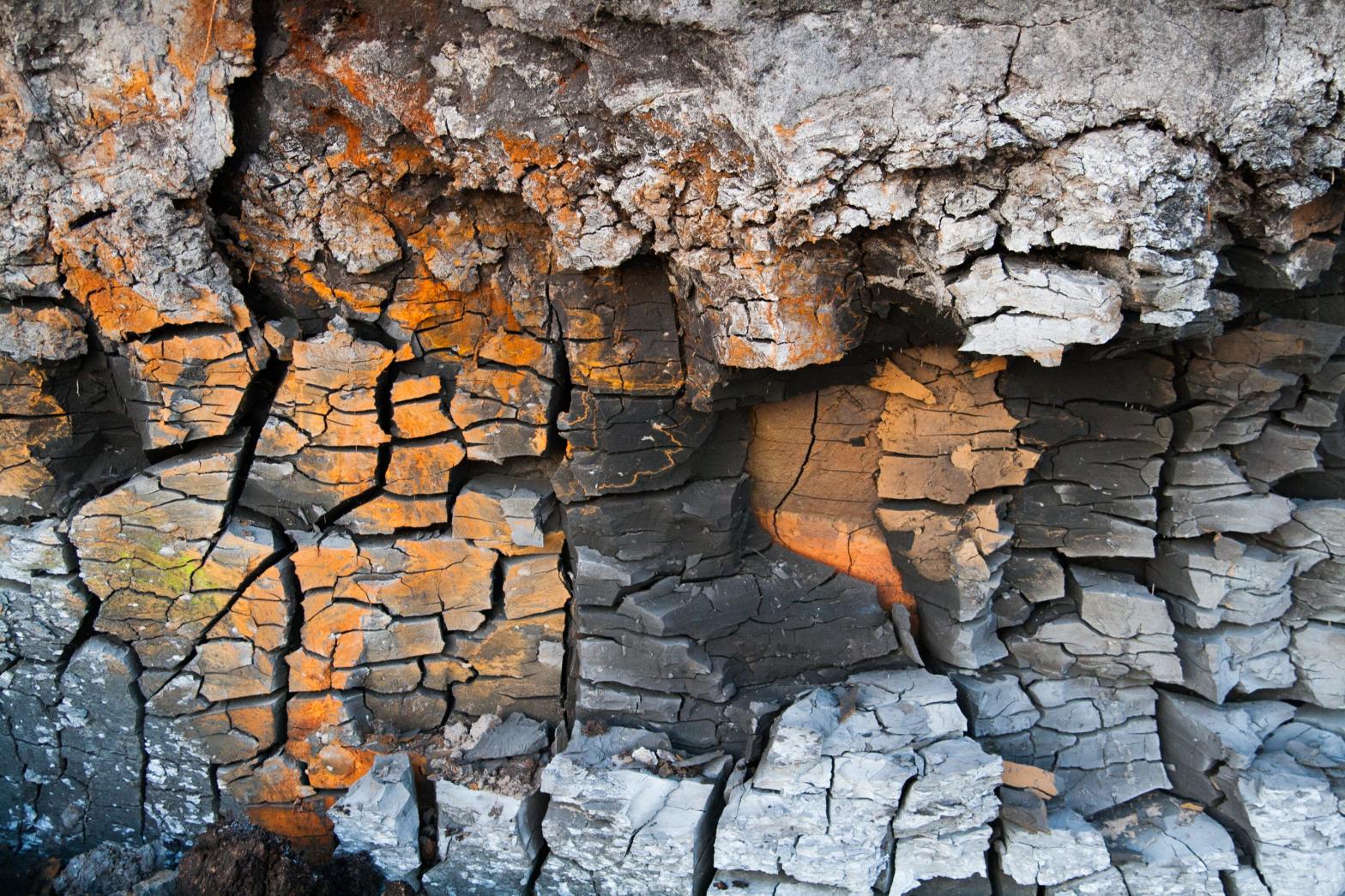
-mwp

Plate Tectonics

I have this nightmare in which I stand in the middle of an enormous continent, dry and barren, while cracks fissile out around me. Movement begins along these cracks, the land is carried away. All my people are carried away. I scream and scream.

Who would ever want to be the last one standing? To become the only human sound? Sprinkling dirt with the last human tears?


The Earth’s crust is traced with cracks. In geology, we call them fault lines. I learn about geology during my freshman year of college, sitting next to a boy who will become my first love. Even in September, I can feel it: the stirring. The beginning of something new and historic. Like the Earth, I guess. Its creation and recreation.

Earth is 4.543 billion years old. No one here will see that age change, which comforts me. Because even if “the end of the world” were to transpire, it wouldn’t be the end, not really. Earth will keep getting older, after our world ends.

Earth formed when heavy elements collided and their gravity pulled in swirling gas and dust. The dust will linger long after we take our last breath of it. It will fill our footprints and cover our cities. Earth’s dust is fundamental without reason. Like love, I guess.

Except, I don’t know if love can exist without lovers.


The boy and I both dread GEO141. But we sit together in the front row of our lecture hall. We are alone up there, and it occurs to me that we are acting very young. The seniors in the back probably scoff at our attentiveness.

He uses old-fashion pencils, the yellow kind that need sharpening. And there’s a small birthmark on his hand, between his thumb and pointer finger.

I am very focused on what my eyes are doing. They look straight ahead. My face appears focused. Sometimes, I am so good at appearing attentive that I forget to hear what the professor says.

The first time I let my eyes slide over to the boy’s notes, we are learning about the moon’s formation. Which, according to giant-impact theory, occurred when Earth collided with another planet. The collision was so massive that debris from Earth’s crust and mantle spewed into orbit, accreting to form the moon. The moon still pulls at Earth’s oceans. It likes to remind us of where it once came.

After the human apocalypse, the moon will finally reclaim its brightness. I imagine that moths, having no artificial lights toward which to fly, will turn back toward the glowing orb. They must miss it terribly.


For our first exam, I memorize the geological time scale, with all its iterations of “zoic.” Some periods are more important to remember than others, like the Cambrian Period, a time of rapid life expansion. Organisms were quickly diversifying and growing more complex. I wonder what the air sounded like, with all those new creatures breathing it. Earth only got louder when the dinosaurs arrived.

Dinosaurs lived on Earth for about 165 million years, which is an unqualified success in the history of life. We don’t talk about dinosaurs in class, though, probably because they make humans look bad.

I don’t talk about the exam either, because he scored half a point higher.


Another important point on the geological time scale is the most recent glaciation period, often known as the Ice Age. The Ice Age reached peak conditions some 18,000 years ago, forming the glaciers of today. We learn about glaciers in October: they form as snow is compressed over many centuries, creating massive bodies of ice.

Glaciers seem like they will last forever, but they don’t. Today, they’re disappearing at an accelerated rate. When the professor talks about climate change, he calls it our “daily dose of guilt.” He smiles apologetically and shrugs his shoulders. I feel exhaustion slip inside me.

I don’t understand how ice and love are on their way out, while Earth’s dust gets to last an eternity longer.


We don’t talk about fossil fuels in class, but we do, extensively, about three types of rock: igneous, sedimentary, and metamorphic. “Different rocks form under only certain conditions, which can tell us something important about the past,” the professor says.

Igneous rocks are formed deep within the earth, in a place melty and forbidden. I wonder if they like being pushed to the surface, or if they miss the warmth below. Metamorphic are formed from other rocks that are changed by heat and pressure. Sedimentary are formed from layers of sand, silt, and dead plants. How this layering process is consistent enough to create the same rocks, I have no idea.

Which type are you? I want to ask the boy. But it is 9AM, and he is still sipping coffee from a paper cup. Instead, I ask my question about sedimentary rocks. And forget to hear the answer.


I score higher than him on our second exam. Not by much, though. Now we can pretend to have a rivalry.

As the semester comes to a close, we focus on plate tectonics: the movement of the large plates of rock on the planet’s surface. Mantle flowing beneath Earth’s crust causes plates to shift, which in turn, changes the landscape.

The surface of the Earth is like a cracked eggshell. Which is a terrifying simile. I sit in class and try to ignore the truth of magma below.


Our professor draws diagrams on the board, composed of rectangles and arrows. Collisions and friction gave rise to mountains and volcanoes, he explains; “What happens when the plates slip?”

“Earthquake,” we recite in monotone voices. Most earthquakes are too small to be felt or cause damage. Large earthquakes are less common but can cause significant harm to the things we count on in everyday life. They change everything. They are world-ending.

“Who has experienced an earthquake?” he asks us.

I don’t raise my hand. But my heart is racing. I want to tell the boy that I’ve never been kissed before.


The Earth’s crust is traced with cracks. In geology, we call them fault lines. Along these fault lines, rocks slide up, down, or past each other. The movement is usually gradual and impossible to detect. Until something slips.

Please, I whisper to them, don’t slip. I’m not ready for my world to change.  

Instead, I think about other inevitable things. Like how he will ask to study together for the final. And how I will stay up that night, hoping the apocalypse waits for me to fall, at least once.

-mwp

Stolen Colors

During our January term, my best friend and I took a road trip through the Pacific Northwest and northern California. The trip was funded by Colby, and to secure this funding, Hayden and I proposed a “place-based writing project.” We would read stories about the places we were exploring and then write our own stories, in conversation with both the authors and landscapes. The project was approved.

It was a pretty good deal.

The story I wrote was inspired by Rebecca Solnit’s book, A Field Guide to Getting Lost. Solnit writes about the Blue of Distance in a way I find intoxicating.

We stole colors, right from the edge of the world. Driving down Highway 1, from Puget Sound to Big Sur, the boy and I dipped our fingers in new landscapes and vibrant pallets. Each fold of coastline was different, each stretch of highway novel. At first, Hayden and I tried describing the colors to each other. We tried holding them in our mouths. But as the hues grew richer, our words turned stale. Neither of us minded the silence that elapsed between us. During those weeks on the road, silence was our third companion. She pushed our faces to the windows, imploring us to look, look. We looked.

And when the time was right, we each picked one color and pocketed it.

I don’t know when adventure became thievery, but it was probably after breathing inside became dangerous. The Covid-19 pandemic was entering its third year, and a new omicron variant was sweeping the country. News of rising cases and new lockdowns awaited us on the radio. We rarely turned it on. During our college years in Maine, Hayden and I had seen life grow bleak and brittle, we’d watched our futures tip over and pour out. Now, months away from graduation, he and I were stepping onto a bleached terrain. What else was there to do, but go search for the colors ourselves?

In January 2022, the colors we acquired felt like survival secrets, rations of hope. They didn’t exist in quarantines, hospitals, or collapsing economies. They existed only on the world’s edges, which are, by design, prepared for the unknown. Hayden took green with him, I’m sure of it. I saw him carry the color from the hills of Big Sur. I felt it sitting in the consul between us, still dripping with afternoon light, filling the cup holders.


Big Sur was the most southern point of our trip and driving that rugged stretch of coast felt like finishing a pilgrimage. Flanked on one side by the Santa Lucia Mountains and on the other by the Pacific, Highway 1 was reduced to a thin pen line, tracing rocky ledges like a calligrapher. Behind the wheel, Hayden took the bending curves at a careful pace. My breath was loud against the window. The landscape glowed from the inside out, as if it had swallowed the afternoon sun. Big Sur’s headlands were wrinkled velvet, cascading down towards the sea. They crumbled across the highway, forming a shoreline of yellow cliffs below, like a shelf of rough-cut gold. Far below, creamy waves washed up against the tendrils of land.

Reaching a particularly elevated stretch of road, near the Bixby Bridge, Hayden pulled over. Car doors slammed and our feet scrambled to the edge of highway, in a hurry. Wind whistled around my body as I walked through curtains of afternoon light, feeling a sense of limpidness in the sudden gravity of this place. It was time to pick our colors. We didn’t say this, but we both knew. Hayden pointed to the green: the color of coastal sage scrub. Sage covered the ridged hills in buttery strokes, catching light and shadow with each wrinkle of land. Branches filled the crevices of cliffs, vines marbled rock faces. The scrub looked like fur on a giant sleeping beast, tempting a hand to run along the creature’s back.

Draped over the terrain, Hayden’s green was the color which held everything together: of life clinging to the edges. It was the stuff of subsistence. While Hayden carried away the folds of green, I looked outwards, towards the thinnest breath of blue.

During our trip, I’d fallen in love with the horizon. Or rather, the layers on the horizon: the way remote mountain ranges lay flat together, as if cut from sheets of tissue paper. From the edge of Highway 1, I could see the bluffs turn silver and turquoise far away. They grew flatter and more translucent with distance, as if dissolving into sky. Finally, on the far edge of what I could see, the land was blue. The color was dreamy, almost forlorn. Hayden and I could drive and drive and never reach it. The color existed in the atmospheric distance, in the thick afternoon light and sheets of ocean mist. I carefully swirled that blue around my thumb and pulled it up into my sleeve.

I didn’t feel bad about taking a color so thin and delicate. Nor was I envious of the velvety green spilling from Hayden’s hands, full-bodied and sustaining. It was poetic, I thought, for us to carry both richness and fragility with us. But this poetry soon evaporated. Or rather, it was burned away.


Two days after Hayden and I departed from Big Sur, a fire burned through it. The blaze, known as the Colorado Fire, burned 700 acres in Monterey County, forcing evacuations and the closure of Highway 1. It scorched the hills surrounding Bixby Bridge, right where we had taken our colors.

Hayden and I learned of this while parked on a dark street in Seattle. The news scattered across the dashboard. And then silence elapsed between us. It was not the friendly kind of silence, pushing our faces to the windows. Instead, she bent our necks towards my phone, towards the burning images of Big Sur, imploring us to look, look. We looked. And I felt the blue turn in my pocket.

 The National Weather Service reported that this was “surreal fire behavior” given California’s wet winter, and because the coastal area had no fire history. I tried to imagine what “surreal” meant. Not in levels of predictability, but in colors. I imagined the sky was soup, boiling and stirring. The sea reflected the sky, a devastating, home-cooked red. The hills were ablaze; the sleeping beast was being scorched. I imaged the creature writhing in agony, as the fire burned down its spine. The sage became a scribble. The horizon was beginning to charcoal.


Memory is a strange thing, as it allows us to paint worlds which no longer exist. For Hayden and me, the Big Sur we saw has become fiction, fading away just as life before the global pandemic did. These memories of “the before” grow fainter with time, and sometimes, we need to repaint them.

Fortunately, we still have colors with us: the green and the blue. They fill the distance between the burned landscape and the unburned one. Between the world that is sick and the world that is not. And colors will continue to fill the distance between Hayden and me. Love and loss and melancholy are all twisted up in friendship, for the desire to be close wrestles with the inevitable space between us. And after graduation, we will each enter the bleak terrain and paint something new. I hope to see his colors on the horizon. And I will have no choice, but to look across the distance without wanting it up close.

-mwp

On The Edges

The end of the semester is nearly upon us, and (as with most endings) things are narrowing down. Days have numbers; they are counted. I am pretending to count them, but only for appearances. In truth, I feel oddly detached from the near-reality of exams and break.

Regardless of my aloofness, however, the end cannot be ignored. Classes have finished and reading period has begun. It’s a strange time between working and waiting, preparation and procrastination. Meanwhile, the kids are partying.

As a younger student at Colby, I didn’t understand this particular party season. Why poison your brain and body right when you need it most? Why celebrate before the hardest part is over? (God, I was so pretentious.) But I get it now. We need to celebrate in the hard. We need to breathe some life into it.


As the semester draws to a close, I’m trying to do some reflection on these past four months. To make things easy for myself, I’ll focus on the highs and lows.

The low of this fall was not a particular moment, but a general feeling. One of nervous exhaustion. This semester pushed me into a corner of unhappiness and asked me to sit there for a while.

On October 28, I wrote:

I sit and think about all the things that scare me
Holding these fears so close to my chest 
I feel them singeing my skin 
Their smoke makes me cough
My clothes are on fire
I’m begging everyone to notice 
And I don’t say a word

This fall, I did a lot of sitting and thinking. But I also did a lot of walking. I started taking nighttime walks in early November, an old habit rekindled from the quarantined spring of 2020.

On these walks, I like to visit the observatory on top of campus. The spot has always been a grounding one for me. On that secluded hill, surrounded by still trees and night skies, I feel closest to myself. The real me, not this nervous, fragile creature I’ve become.

It’s a short walk to get to the observatory, less than ten minutes from my dorm room, but I savor the time. And as the temperatures drop, these evening trips only grow more invigorating. I like being swallowed by the cold; it helps me feel my body better, from the inside, as a soft animal trying to keep itself warm. My fingers grip each other inside coat pockets, holding everything in place.

My favorite memory of this semester is one walk in particular. Around midnight on November 12th, my friend and I headed up to the observatory, but we didn’t stop there. With music playing on my speaker, and the light buzz of beer in our bodies, we wandered into the surrounding forest. The frosty trail was impossible to discern without a flashlight, but we didn’t bother with one.

The two of us walked slowly instead, occasionally reaching out for one another. And we never stopped singing. Not even when my speaker died.

Afterwards, I wrote:

I love Colby most on its edges
And I love meeting myself out there
I love her sense of limpidness in the sudden gravity 
of a small body on a big planet 

And I’ll end on that high.

-mwp

I’m Not Happy, and That’s OK

I submitted the first chapter of my thesis on Monday. Which indicates, I think, the end of the beginning of senior year. I’m fully in it now. And I have a secret to share: I am not happy.

This fall has not left me smiling or beaming with joy. In truth, I am largely suffering. My feet drag throughout the day while my heart begins to race after dinner. I have grown irritable, chiseled away by stress and fatigue.

Sometimes, I find myself standing so still, frozen in the middle of simple tasks by the weight of my own shoulders. Sometimes, I feel like my clothes are full of water. Sometimes, I work until I forget to feed myself. Sometimes, I cry in the bathroom before walking in to class.


Maybe my lack of joy comes with the times; we are all swimming in the backwash of a global pandemic. Everyone is trying to remember who they were before 2020; and I’m guessing very few are succeeding. The nation’s collective trauma manifests in each of us. I can feel all my COVID-19 resolutions fading away––to be grateful for movement and action, to enjoy the vibrancy of college life. In fall 2021, I mostly just feel tired.

Maybe my lack of joy comes with academic burnout; the chronic condition resulting from a (literal) lifetime of school. Senioritis would be the most convenient explanation––but it also feels the least true.

As a student, I can think and write about things that are real, while keeping my distance from them. I can engage with what terrifies me––climate change, capitalism, women’s oppression, etc.––on a theoretical level. I can break down hierarchies in my papers. I can change the world in a single presentation.

Maybe my lack of joy then comes with senior year itself; the constant knowing that school is almost over. This Colby world of brick buildings, and loud dorm rooms, and long nights in the library will not belong to me much longer. Come May, I will be thrown out on the streets of real life.

I’m glad it’s not May. I’m grateful for the months of college still ahead. I’m happy to be here, but not like happy, happy. Not like the smiling kind. More like the kind of happy in which you’re happy to be alive but also angry that life is so damn hard.


In my senior year of college, I am surrounded by wonderful friends and fascinating work. I know these may well be the “good old days” I cherish forever.

And yet, joy is scarce. I guess I just thought I would feel it everywhere, all the time.


I’ve spent so much of this semester feeling frustrated with my own general unhappiness. Please, I’ve begged myself, try to appreciate this time. Try to be happy. But now, I’m starting to realize something else. Maybe a good, meaningful senior year has nothing to do with bliss. Maybe senior year has everything to do with feeling anxious and angry.

I take comfort in a little book called How To Be Perfectly Unhappy by Matthew Inman. He says, “I’m not happy, and I don’t pretend to be. Instead, I’m busy, I’m interested, I’m fascinated. I do things that are meaningful to me, even if they don’t make me happy.” Our sense of happiness is so brittle, Inman says, it can be destroyed simply by asking whether or not it exists.

I feel differently from how I felt this summer. And last year. I guess I feel worse. I’m working hard and worrying often. I’m writing my thesis, and I failing to write my thesis. But I’m doing my best and then doing it again.

I’m doing my best better than I’ve done it before.

So, don’t ask me if I’m happy. Don’t ask me if I’m having a fun and fabulous senior year. I’ll tell you no. I’ll tell you instead that I’m busy, I’m interested, I’m fascinated. I’ll tell you that I’m brimming with ten thousand moving parts.

-mwp

Sunset Year

Tomorrow, I begin my Senior Year of College. And I’m struggling to write about it.

When friends and family are reminded of my upcoming Senior Year, they give one of two responses. The first, “That’s crazy!” is an explanation of disbelief. Time has flown, they say, as if my college career elapsed in a second––and neither of us were paying attention. They’re saying: you’re suddenly so old. Meanwhile, the second response, “That’s exciting!” is delivered with an envious smile. The intoxicating romance of college life flashes before them. Everyone would love to go back, it seems. They’re saying: you’re still so young.

So, which am I: old or young?

In general, these remarks are as harmless as they are cliché. But they’re also hiding something. Because here’s what “crazy” and “exciting” don’t admit: Senior is just a fancy word for Ending.


I don’t know exactly how to describe this, but there’s something deep within me, something intensely fragile, that is terrified of endings. They never come when I’m ready. They’re never clean, never quick, and never remedied. Moreover, I struggle to enjoy anything good when it’s for the last time.

It feels like the glamor of Senior Year somehow disrespects the finality of everything––and the harshness of what’s to come. There’s nothing “crazy” nor “exciting” about that fact that, in nine months, I will be ejected into a world struggling to breathe. I will be asked to fix this world, and then not paid enough, and then asked why I’m struggling.

Maybe I’m being cynical. Maybe post-college life won’t be so bad. Even if it is mandatory.

The thing is, though, I’m not a cynical person. I want to embrace the beauty of my Senior Year. I want to wrap myself in the nine months ahead, finding moments of close-to-the-chest joy that don’t last…but maybe, don’t need to.


When I think about endings in the real world, the best one is certainly a sunset. If day must become night, then sunset is certainly a beautiful way.

Of course, it’s nearly impossible (and admittedly lame) to write about sunsets. “What can we say about the clichéd beauty of sunsets?” novelist John Green asks. After years of amazing us, sunsets have worn through writers’ words of admiration, rendering them mawkish or saccharine. Sunsets are daily occurrences, universal and ordinary. And yet, they’re startling. When we see the natural world at its most spectacular…there’s not much to say.

“All I can say about sunsets,” Green offers, “is that sometimes when the world is between day and night, I’m stopped cold by its splendor, and I feel my absurd smallness, and you’d think that would be sad, but it isn’t. It only makes me grateful.”

So, what can I say about clichéd “craziness” and “excitement” of Senior Year? Not much, I guess. Green is right; when it comes to certain endings, triteness can’t be avoided. All we can do is watch and not stop watching, letting the colors wash over us.

In the nine-month ending ahead, I hope to be occasionally stopped cold by its splendor.

-mwp

I Move Things With My Mind

My name is Matilda. And it’s a great conversation starter.

Typically, I offer my name to a narrow slice of people: nurses, bank employees, TSA agents, etc. Those people who sit behind desks and require formal identification. “Name?” they ask in a monotone voice. But when I provide it––Matilda Peck––their eyes light up. They smile with recognition. Maybe this is what celebrities experience, with a name already known and loved.

“Have you read the book Matilda?” the administer asks. “Have you seen the movie?” It’s their favorite. When I was younger, I was bored by this routine conversation. But now, I’m grateful for the touchstone. Especially because that Matilda, the one in reference, these is a superhero.

Matilda Wormwood is the protagonist in Roald Dahl’s bestselling 1988 novel, which was adapted to film in 1996. She is an exceptionally bright young girl, with burgeoning psychokinetic powers. A precocious reader, Matilda frequents the public library to escape her negligent family. After entering school, Matilda quickly excels and befriends her teacher, Miss Honey, who grows into a parental figure. Meanwhile, the school’s headmistress, Miss Trunchbull, is terrorizing students with excessive and strangely creative punishments. Seeking to avenge Trunchbull’s victims, Matilda uses her telekinesis to pose as a ghost and haunt the principle. Trunchbull runs away, never to be seen again, and Matilda and Miss Honey find their happy ending amidst books and learning.

Intelligent, courageous, kind, and with supernatural capacity, Matilda Wormwood is truly extraordinary. She has done a great service to all the Matildas of the world; giving us association with brilliance and bravery. I am lucky to share my name with her. In more casual introductions, I’ve even started referencing her, just to get on someone’s good side: “Hi my name’s Matilda, and I can move things with my mind.” This always gets a laugh. And luckily, no one asks me to prove it.

Contrary to popular assumption, however, I was not named for Roald Dahl’s character. I was named after my grandmother. Matilda was my father’s mother, and she died many years before I was born. Sometimes, she feels as fictional and far-away as Matilda Wormwood. But I imagine she was just as extraordinary.


My name is also Tilly. Which is not a conversation starter. What kind of name is that? I imagine my acquaintance wondering. “It’s short for Matilda,” I sometimes add. As if I need to justify it.  

Tilly is the name I chose for myself when I was ten. There were many reasons for this choice, most of them private, some painful. For now, I’ll just say that ten was a challenging age. After nine years of just being kids, the world suddenly divided us into boys and girls. Or rather, started giving weight to those previously flimsy titles. Started applying them like heavy makeup.

Being a kid––when you can be everything and become anything––was very different from being a girl. Being a girl came with rules, expectations, and scary bleeding vaginas. It meant being polite and agreeable, and having to wear a dress for Picture Day. At ten, I could see the forked road ahead: One path led towards glorious manhood, the other led somewhere hushed and narrow, like the tampon aisle. And I did not want to go to that tampon aisle. So, I buried any femininity under baggy shorts and big tee-shirts. “Olive drab,” was how my mom described my style. On the brink of adolescence, dressing like my brothers felt like the safest option. Being a boy gave me time to figure out how to be a girl. 

While dragging my feet on the doomed path towards tampons, I felt everything else spinning out of control. In school, I was painfully shy (maybe if I was a boy, they would have called me “reserved”), and I was always falling behind. Everything we learned felt stifling, as if it were designed to make me confused and miserable. Spelling games and math fractions and random history lessons washed over me in thick, nonsensical stew. Fourth grade was the climax of elementary school: stuff was hard, but nothing had meaning yet. I remember sitting in class and feeling a dull panic. Like I’d never get a grip.

That year was a series of awkward steps towards who I was becoming. And the biggest one, of course, was becoming Tilly. While many things didn’t fit––being a girl, being a student, being in fourth grade––that name did. Tilly fit perfectly. Scraping together any self-assurance I had left, I pulled the name over my chest like armor.


In truth, I’ve always loved the name Matilda. I just haven’t figured out how to wear it. Which sounds silly, of course, because I’ve been Matilda since birth. But while Matilda is this big, worldly thing I was born into, Tilly is what I built from scratch. It was the first thing I really claimed for my own.

Wearing Tilly on my chest for over a decade, I’ve carried Matilda in my pocket. I only pull the name out for formal introductions, identity verification, and paperwork. Recently though, I’ve felt curious about it. I wanted to try Matilda on for size.

I decided to go by Matilda at work this summer, casually as well as formally. The full name experience. It was bizarre to hear my colleagues integrate “Matilda” into their everyday vernacular. They did it so easily, like the name weighed nothing. In meetings, they addressed me without any hesitation, as if Matilda were a name, and not a conversation topic.


Maybe none of this makes sense. Maybe it’s far too much reflection on a name––something typically left unquestioned. But here we are. And I want to leave you with one final thought: the meaning of my name.

Matilda, also spelled Mathilda and Mathilde, is the English form of the Germanic name Mahthildis, which loosely translates into “strength” and “might.” This translation has always resonated me, even when the name itself feels big and strange. As a small person, who tends to be passive and self-sacrificing, strong is the welcomed antithesis to what I appear to be. Mighty is what people don’t expect. And when I’m feeling particularly overwhelmed––when that dull panic of fourth grade returns––I think about Matilda, and how I am named to overcome adversity.

This is how I see it now: Tilly is the person I’ve built. Matilda is the builder.

-mwp

Playing with Poetry

At last, I’ve summoned the bravery to share my June poems. If anyone was waiting (which seems doubtful), thank you for your patience.

This project––writing a poem every day for the month of June––challenged me in many ways. As I describe in my previous post, poetry demands a far larger creative budget than I am used to. These words are expensive.

Most days, I ignored my Notes app like a disgruntled employee ignoring their inbox (or any place demanding a response). I procrastinated the task of poetry––sometimes, I even dreaded it. The poem I wrote on June 12 captures this feeling rather well, actually.

June 12 – Messy

There are moments throughout the day
When I pause, wondering 
Should I write my poem now?

No, I tell myself
It’ll come to you tonight 

As if a poem arrives 
As a neat Amazon package 
Ordered just that morning 

As if daily wisdom
Accumulates with hours 
For a nightly paycheck

Or maybe 
I just want to avoid the mess
Of writing 

Fine. I’ll do it tonight 
Between sheets 
Beneath dark windows
No one will see

Ironically, this poem inspired one I wrote later, after the month had ended. This post-June poem––titled “Caution Tape”––is one I could be proud of. I’ll include it at the bottom of this post.

Unlike “Caution Tape,” however, I didn’t write any June poems with an audience in mind. I couldn’t even bring myself to share the whole collection––the most personal ones have been excluded from this post.

Honestly, I’m not sure what to make of most of these. Maybe that’s the nature of poetry. Or the nature of a non-poet.

Anyway, here’s what I have to offer:

June 2021

June 1 – Spinning

I miss the way the world turned 
Before your absence turned with it 
Spinning around and around 
Inside my body 

When the day wanes
And your absence spins faster
I grow too still 
Sometimes, I can barely 
turn 
    my 
       head

June 3 – Contemplating a Nap

I’m tired
But even more intimidated by naps 
The chemical reaction
Of dreams fizzling with afternoon 

Would my mouth taste tired 
All over again?
Wasted hours sitting on my tongue 

How would the day feel
If cut in two?
Probably cheated 

Yelling at me 
You’re not young anymore!
Afternoons have a tendency
To lose their patience 

How would the night feel
Falling over a rested body?
It might crackle 
Edges sharp

And who am I, to crackle night?

June 4 – Fortune Cookie 

“You have friends, and you know it.”
The cookie told me

I only believe those fateful receipts
When 48 is listed as lucky

Turning the paper in my fingers, the number appeared
I blushed
She smirked
“You can’t deny it,” she said  
As if she expected me to

June 7 – Can/not 

It’s nights like these 
When my chin falls
And my fingers drag
And I cannot hold myself   
                  I miss your arms

Your arms are yours; I remind myself
But I wish they were mine

You cradle me and everything I cannot do 
In the same embrace
             same breath 
Until cannot breaks––not drifting away
Like the back of a spaceship 

I wonder if your arms give you the power
They give me
I wish they were mine

June 11 – New and Old

Against the bars 
Of a freshly opened city 
We threw our joy and our bodies 

Tequila mouths bitter 
Screaming the lyrics 
To songs of an ancient world 

I danced through bubbles of strangers
Like starved animals 
Their faces unmasked 
And I was looking for him 
Still

June 13 – Producer Angst

So much talk of 
Words saving the world 
Mine? 
Wouldn’t that be everything 

Can my words
Stand without my name
Orphaned, oceans away

Can they grow bigger 
Than my fingers
Than the people I embrace 

Can they captivate cruel strangers
With sharp eyes and teeth 
Not thinking of production
Not of me

Are my words 
The kind that save?
Wouldn’t that be everything

June 14 – Reunion 

He’s 15 minutes away
And I don’t know how to write a poem 
About my mascara 
Cleaned-up room
Quivering skin
Restless feet
Body listening
For his car

Hello, good to see you
I guess I’ll say 
Words are silly sometimes

June 16 – Cravings

I need the ocean, I think
I want to feel that empty way
In the evenings 
Washed clean from the inside 
Salty chalk lingering 
In the corners of my body


(finally, an easy poem to write)

June 19 – Rebuilding (part 1)

I wish I could rebuild myself with air 
Deep breaths as stone foundation 
And four strong walls
Count them
1…
2…

Whispers of self-assurance 
Blocking out all other sound 
The rise and fall of my chest 
Sucking in power

It’s ok, you’re ok
As if anyone is listening

June 20 – Rebuilding (part 2)

I wish I could rebuild myself with air 
If only strength were so easily acquired 
Gulps and gasps wouldn’t seem so 
Embarrassingly: human 

No, I’d be transforming
Into a goddam dragon

June 22 – Cloudy

The past is not fixable 
But it’s not fixed, either
And I keep stirring it up
Clouding the windows 

My thoughts are in past tense 
They take me to empty hallways
Everyone else has left 
Time is a vacuum
But there’s too much dust

June 23 – Missing

What did Lorde say
About a writer in the dark?
“She’s gonna play and sing and lock you in her heart”

I’m searching for that writer now
Stumbling on her secret power 
As if it were just 
Behind her knees

My phone is a flashlight, a weak excuse for one
I’m waist-deep in shadows 
Calling for her
But it’s too damn echoey in here

“Bet you rue the day you kissed a writer in the dark”
Lucky for you,
She’s missing

June 24 – Full of Space

It’s hard to make space for poetry,
I’ve realized 
Space for thought accumulation 
For words pouring 
                          down
Trying to catch the right ones
In my red bucket 

Am I inspired by days?
Drinking their entirety 
To find a poem at the bottom 
Of my red bucket 
My belly feels too full

June 26 – Thinking 

Sometimes I think
If I think enough 
Something good will happen
As if the bad was thought too hard––
––it broke, and the pieces washed away

Usually I think 
I know the difference 
Between anxiety and my gut
Which is lying and which is true
But then, I start thinking

And I think about
What others think about 
In the car, out the window
When they think they’re alone

June 29 – Happy Returns

I dip into this place with my fingers 
Seaweed tendrils
Between the periwinkles 
I lick my skin clean

I can feel the layers 
Of all summers spent here 
They cradle me 

I’m ready to grow tired of myself 
Of my lumps and roughness 
Left uncovered 
By the rocks

I’m ready to watch the sky and 
Her big, wide mirror 
All her lumps and roughness
Mocking mine 


Caution Tape    (Post-June) 

I handle myself
Like I’m so damn fragile
We don’t want to make a mess
Do we?
 
Don’t open that here
Let’s wait till we get home
Heaven forbid it leaks
Or stains
Your nice shirt
 
Stop
Running away
Through the legs of strangers
Tell them your name
And your age
Hold up fingers if you can’t count
Maybe they’ll be kinder
 
Stop
Smearing finger-paints of broken landscapes
All over living room walls
Wash that off
Let’s hope your eyes hold enough water
 
And why is your bed a mess
And why are your lips beneath the pillow
Gross
Did you tear them off again?


-mwp

Through the Clouds

I’ve been working on a poetry project this June, in which I write a poem every day. I thought the switch from daily journaling to daily poetry would be a seamless one. I was wrong.

Writing has always been a painstaking process for me. I handle words like they’re expensive, and I’m on a strict budget. I formulate each sentence carefully––mulling it over in my mind, tasting it in my mouth––before giving it over to my fingers. I work slowly. Too slowly. And by the end of a writing project, I’m exhausted.

Daily journaling is a different kind of writing––it isn’t expensive. Rather, it’s an investment. I’m investing in long-term memory. I’m investing in that 60-year-old version of myself who wonders: “What was I up to on October 20th, 2015?” Like a retirement fund, I put in a few pennies every day and hope it accumulates. And in these entries, I don’t need to get the words exactly right. I don’t need to write eloquently, or even coherently. I don’t need to be interesting. In my journal, words are cheap; I spend them carelessly.

Poetry, in contrast, is the most expensive kind of writing. Each word costs a fortune. Each one must be purposeful, unexpected, thought-provoking. If not every word, every line. It’s hard to make room for this kind of creative spending. It’s hard to make room for art.

I’ll likely post this small portfolio of June Poems when the month is over. You’ll see that I am an amateur––hardly a poet at all. But I’m trying. In the meantime, I want to share one poem.

For context:

The arms have summer have wrapped around me and pulled me above the landscape of this past year. I think about all that has happened in recent months, moments big and small. I think and think and think until the thinking drives me crazy. Like writing, I guess

Anyway, here’s that poem:

June 22 – Cloudy

The past is not fixable 
But it’s not fixed, either
And I keep stirring it up
Clouding the windows 

My thoughts are in past tense 
They take me to empty hallways
Everyone else has left 
Time is a vacuum
But there’s too much dust

Poetry critics, be kind. Ignoring the structure or syntax––or whatever is wrong with this bit of poetry––I stand by its meaning: Reflection can be a dusty cloud. Sometimes, I don’t mind being obscured in the folds of this past year. I like tracing the lines of how I got here, like a maze I’ve already learned the path through. Sometimes, though, I walk through this maze too many damn times. It becomes maddening.

I wonder if other people get trapped like I do, wandering through this cloudy, unfixed past. Stirring everything up, doing it all over again.

I guess this is a strange grievance, coming from someone who journals every day. And it’s true: I journal because I don’t want to lose the past. But I don’t want to lose the present, either. And right now, the present feels more likely to slip away.

So, in the spirit of "holding the present," here are some things that are true. Right now:

-I'm sitting in a coffeeshop––and not taking it for granted
-I'm using the name Matilda at work (for the first time) P.S. I didn't realize the name could sound so casual
-I'm slowly going blond (as I do every summer)
-I'm reading The Anthropocene Reviewed by John Green...and wondering about his environmental credentials 
-I might be witnessing the end of America's Covid-19 Pandemic
-I'm struggling to solidify my Honors Thesis plan (which normally comes first, the desire to write or the subject idea? I still don't know.)
-I love my brothers and I think of them often
-As always, I'm grateful for my readers

-mwp

A Note on Spring

I don’t have time to write about spring, so I’ll keep this short. 

But someone had to say it: Spring at Colby is a mockery. 

The cold of winter is still coiled in my tailbone. I need to go outside and thaw. And yet, here I am, confined to work undone. So many full pages to read, so many empty pages to fill.

Spring at Colby is a mockery.

I watch the pen-drawn world soften and saturate. It looks more like an oil painting now, smeared and moving. The edges of winter are blurring; silhouettes give way to bodies.

My own body is changing, too. It grows more restless––eager to stand, and stretch, and flee the brick walls of academia. I can hear the doorframe calling me, walk through.

As the pile of work before me grows, my neck cranes to the light. Like a stubborn indoor flower, twisting in its pot. If only flowers had final exams.

Just weeks ago, the wooded arboretum fringing campus was a wall of grey trees, flat and forlorn. These days, it’s deepening. New colors appear, giving the forest layers and intrigue.

On campus, the trees’ daily changes are more obvious. Their once-skeletal branches are filling out, tempered by buds and tiny sprouts. This scrub will mature into green foliage soon, polished and predictable. But for now, all I see are muted shades of yellow and red, clinging to branches like undergarments. I wonder if the oak and maple feel embarrassed this time of year, caught half-dressed.

The cherry, meanwhile, swells with pride. Blooming brilliantly, her branches drip with lavish pink petals. Unlike her scrappy peers covered in peach fuzz, this tree wears a cascading ballgown of flowers. I feel jealous just looking at her. Like a full moon in a starry sky, she sucks up all other light. The cherry will be ordinary in a few weeks––with a small stature and unimpressive foliage––but today, she’s the supermoon.

May’s eclectic collage reminds me of autumn months. But while fall is smooth and mature––gracefully waltzing through a firework display of foliage and darkening nights––spring arrives on shaky legs. It’s messy, like an adolescent tumbling from bed. There’s something relatable about that. Endearing, even. I don’t mind an awkward first impression.

What I do mind, however, is watching this all from behind a window. I feel left out.

I should be kinder to my potted flowers.

With stollen time, I wander through the blushing arboretum. Soft earth gives way underfoot, slurping my sneakers into the trail. I pretend to scrape the dirt off afterwards, but secretly, I enjoy the muddy stains.

Even if they mock me.

-mwp